


Table Of Contents
-
Key Highlights
-
Understanding Blood Sugar Fluctuations During the Night
- The Role of Circadian Rhythms and Melatonin in Nighttime Glucose Control
- Impact of Night Shift Work and Artificial Light on Blood Sugar
- Sleep Quality and Its Effect on Overnight Blood Sugar Levels
- Dietary Strategies and Bedtime Snacks to Stabilize Blood Sugar at Night
- Using Continuous Glucose Monitoring for Nighttime Blood Sugar Management
-
Common Questions About Blood Sugar at Night Answered
-
References
Key Highlights
- Blood sugar levels naturally fluctuate overnight due to circadian rhythms and hormonal changes
- Night shift work and exposure to artificial light at night increase risk of insulin resistance and type 2 diabetes by up to 30%
- Melatonin, a hormone elevated at night, reduces glucose tolerance and insulin secretion, influencing nocturnal blood sugar
- Poor sleep quality and sleep deprivation are linked to higher nighttime blood sugar and increased diabetes risk
- The carbohydrate content and timing of the last evening meal significantly affect postprandial glucose and next-morning fasting glucose
- Continuous glucose monitoring (CGM) provides valuable insights into overnight glucose patterns and helps manage blood sugar
- Practical lifestyle changes, including light exposure management, sleep hygiene, and dietary adjustments, can improve nighttime blood sugar control
Understanding what happens to your blood sugar at night is essential for managing diabetes, optimizing metabolic health, and reducing long-term health risks. While we sleep, our bodies undergo complex hormonal shifts and metabolic processes that directly influence glucose levels. Recent research reveals that factors like circadian rhythms, artificial light exposure, sleep quality, and meal timing play crucial roles in nighttime blood sugar control.
Understanding Blood Sugar Fluctuations During the Night
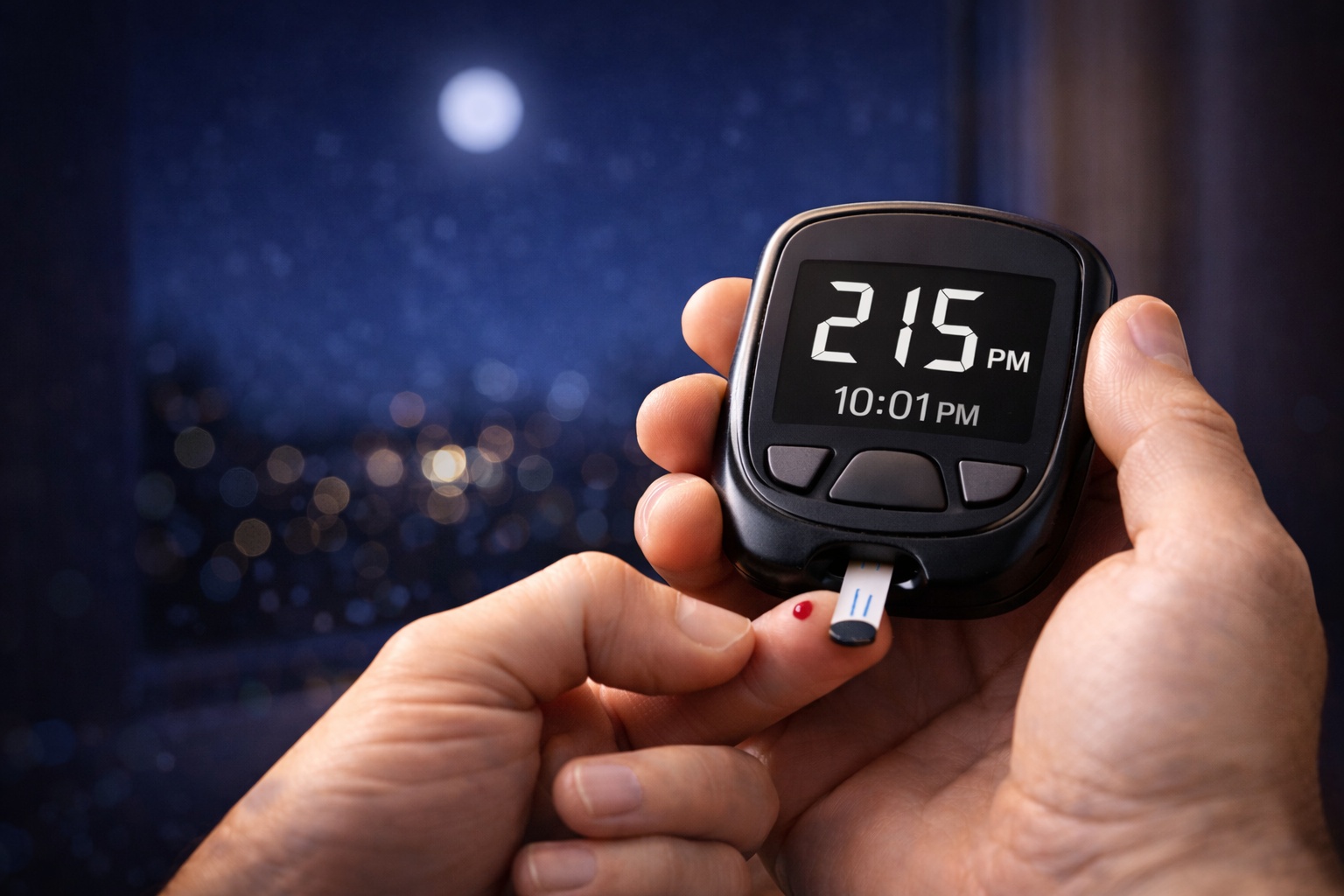
During a typical night of sleep, blood sugar levels undergo natural fluctuations driven by our body’s internal clock and hormonal changes. For most healthy adults, blood sugar levels at bedtime should range between 90-150 mg/dL, according to MedlinePlus guidelines.
Throughout the night, glucose metabolism changes as the body transitions through different sleep stages. In the early hours of sleep, blood sugar typically remains stable or decreases slightly as the body uses glucose for cellular repair and maintenance. However, in the pre-dawn hours (typically between 4-8 AM), many people experience what’s known as the “dawn phenomenon” – a natural rise in blood sugar caused by the release of hormones like cortisol and growth hormone that prepare the body for waking.
What is Normal?
Normal fasting blood sugar levels in the morning should be below 100 mg/dL for people without diabetes. For those with diabetes, target ranges may vary based on individual treatment plans, but generally aim for 80-130 mg/dL before meals.
The importance of overnight glucose control extends beyond immediate comfort. Fasting blood sugar levels measured in the morning serve as a critical indicator of overall metabolic health and diabetes management effectiveness. Research shows that the glucose response after the last evening meal strongly correlates with next-morning fasting glucose levels, with correlation coefficients around 0.7 in studies of people with dysglycemia.
The Role of Circadian Rhythms and Melatonin in Nighttime Glucose Control
Your body’s biological clock, or circadian rhythm, exerts powerful control over glucose metabolism throughout the day and night. This internal timing system regulates when cells are most sensitive to insulin and when the pancreas secretes insulin most effectively.
Insulin sensitivity naturally peaks during daylight hours and decreases at night, meaning your body is less efficient at processing glucose after dark. This is why eating the same meal at night versus morning can produce different blood sugar responses – a phenomenon documented extensively in circadian rhythm research.
Melatonin's Dual Role
Melatonin, the hormone that promotes sleep, plays a surprisingly complex role in blood sugar regulation. While melatonin helps us fall asleep, it simultaneously reduces glucose tolerance and insulin secretion. This means that when melatonin levels peak during the night, the body becomes temporarily less able to process glucose efficiently.
The mechanisms involve melatonin receptors on pancreatic beta cells that, when activated, actually suppress insulin release. This biological design makes sense from an evolutionary perspective – during sleep, when we’re not eating, the body doesn’t need robust insulin responses. However, this also explains why eating late at night or during shift work can lead to elevated blood sugar levels.
| Time of Day | Insulin Sensitivity | Melatonin Level | Glucose Tolerance |
|---|---|---|---|
| Morning (6-10 AM) | High | Low | Optimal |
| Afternoon (12-6 PM) | Moderate-High | Very Low | Good |
| Evening (6-10 PM) | Moderate | Rising | Reduced |
| Night (10 PM-6 AM) | Low | Peak | Lowest |
Impact of Night Shift Work and Artificial Light on Blood Sugar
One of the most significant modern threats to healthy nighttime blood sugar control is circadian disruption from night shift work and artificial light exposure after dark.
Night Shift Work and Diabetes Risk
A comprehensive meta-analysis of 10 cohort studies involving over 270,000 participants found that night shift workers face a 30% increased risk of developing type 2 diabetes compared to day workers. The risk is even higher among certain groups:
- Women night shift workers show greater diabetes risk than men
- Individuals with higher BMI experience compounded risk
- Long-term shift workers (more than 5 years) face escalating risk
The mechanisms behind this increased risk involve multiple pathways. Night shift work forces people to eat and stay active when their circadian system expects sleep, leading to mistimed insulin secretion, reduced glucose tolerance, and chronic metabolic stress. The suppression of melatonin from nighttime light exposure further disrupts glucose metabolism.
Artificial Light Exposure at Night
Even for people who don’t work night shifts, exposure to artificial light at night (LAN) poses metabolic risks. A groundbreaking study using UK Biobank data found that outdoor light exposure at night increased type 2 diabetes risk by approximately 30% per 10-lux increase in light intensity.
Practical Mitigation Strategies
To reduce artificial light exposure at night:
- Use blackout curtains in the bedroom
- Dim indoor lights 2-3 hours before bed
- Use blue-light filtering glasses if screen use is necessary
- Keep bedroom temperature cool and completely dark during sleep
- If you work night shifts, wear sunglasses on the commute home to minimize morning light exposure
Sleep Quality and Its Effect on Overnight Blood Sugar Levels
The relationship between sleep and blood sugar is bidirectional – poor blood sugar control can disrupt sleep, and poor sleep quality can worsen blood sugar control, creating a harmful cycle.
Analysis of National Health and Nutrition Examination Survey (NHANES) data revealed that people with unhealthy sleep patterns face a 52% increased risk of type 2 diabetes compared to those with healthy sleep habits. Unhealthy sleep patterns include:
- Short sleep duration (less than 6 hours per night)
- Long sleep duration (more than 9 hours per night)
- Insomnia or difficulty maintaining sleep
- Frequent nighttime awakenings
- Sleep apnea and other sleep disorders
How Poor Sleep Affects Blood Sugar
Sleep deprivation triggers multiple pathways that elevate blood sugar:
- Increased cortisol: Poor sleep raises stress hormone levels, which increase glucose production by the liver
- Reduced insulin sensitivity: Even one night of poor sleep can temporarily reduce insulin sensitivity by 20-30%
- Inflammation: Chronic sleep loss promotes systemic inflammation, which interferes with insulin signaling
- Appetite dysregulation: Sleep deprivation increases cravings for high-carbohydrate foods, leading to blood sugar spikes
According to the National Institutes of Health, improving sleep quality is now recognized as an essential component of diabetes prevention and management strategies.
Dietary Strategies and Bedtime Snacks to Stabilize Blood Sugar at Night
What you eat in the evening and when you eat it significantly influences nighttime blood sugar levels and next-morning fasting glucose.
The Last Evening Meal Matters
Research published in the journal Nutrients demonstrates that the postprandial (after-meal) glucose response following the last evening meal is a strong predictor of next-morning fasting glucose levels. The study, known as the NY-TREAT trial, found that people with dysglycemia who had higher glucose levels after their evening meal consistently woke up with elevated fasting glucose.
Optimal Evening Eating Strategies
| Strategy | Recommendation | Impact on Nighttime Blood Sugar |
|---|---|---|
| Meal Timing | Finish dinner 3-4 hours before bedtime | Allows blood sugar to stabilize before sleep |
| Carbohydrate Type | Choose low glycemic index carbs (whole grains, legumes) | Produces gradual, sustained glucose response |
| Protein Inclusion | Include 20-30g protein with evening meal | Slows carbohydrate absorption, promotes satiety |
| Fiber Content | Aim for 10-15g fiber at dinner | Reduces blood sugar spikes and improves morning fasting levels |
| Portion Control | Limit total carbs to 30-45g for dinner | Prevents excessive nighttime glucose elevation |
Bedtime Snacks: When and What
For some people, especially those taking insulin or certain diabetes medications, a small bedtime snack can help prevent nocturnal hypoglycemia (low blood sugar during sleep). However, timing and composition are critical.
Smart Bedtime Snack Options
If you need a bedtime snack to prevent low blood sugar:
- Greek yogurt with berries (15-20g carbs, high protein)
- Apple slices with almond butter (15g carbs, healthy fats)
- Small handful of nuts with a few whole grain crackers (12-15g carbs)
- Cheese and whole grain crackers (10-15g carbs)
Avoid: Sugary snacks, refined carbohydrates, and large portions within 2 hours of bedtime.
Using Continuous Glucose Monitoring for Nighttime Blood Sugar Management
Continuous glucose monitors (CGMs) have revolutionized diabetes management by providing real-time data on blood sugar trends, including during sleep when traditional finger-stick testing is impractical.
How CGMs Work
According to the National Institute of Diabetes and Digestive and Kidney Diseases (NIDDK), CGM devices use a tiny sensor inserted under the skin to measure glucose levels in interstitial fluid every 5-15 minutes. The data is transmitted to a receiver or smartphone app, allowing users to see glucose patterns and trends in real-time.
Benefits for Nighttime Monitoring
CGMs offer several advantages for managing blood sugar at night:
- Hypoglycemia alerts: Set alarms to wake you if blood sugar drops dangerously low during sleep
- Hyperglycemia detection: Identify patterns of high blood sugar that occur overnight
- Dawn phenomenon tracking: See exactly when and how much your blood sugar rises in the early morning
- Treatment adjustment: Provide data to help healthcare providers optimize insulin doses and medication timing
- Dietary insights: Reveal how different evening meals affect overnight glucose levels
Studies show that CGM users experience fewer severe hypoglycemic episodes and better overall glucose control compared to those using traditional finger-stick monitoring alone.
Common Questions About Blood Sugar at Night Answered
For adults without diabetes, normal bedtime blood sugar is 90-150 mg/dL. For people with diabetes, target ranges vary based on individual treatment plans but generally aim for 100-140 mg/dL at bedtime. Consult your healthcare provider for personalized targets.
Nighttime blood sugar spikes can occur due to several reasons: the dawn phenomenon (early morning hormone release), eating high-carbohydrate meals too close to bedtime, insufficient diabetes medication, stress, illness, or poor sleep quality. The circadian rhythm’s natural decrease in insulin sensitivity at night also contributes to this issue.
Night shift work disrupts circadian rhythms, suppresses melatonin production, and forces eating when the body expects sleep. This leads to reduced insulin sensitivity, impaired glucose tolerance, and increased insulin resistance. Research shows night shift workers have a 30% higher risk of developing type 2 diabetes compared to day workers.
Yes. Studies using UK Biobank data found that outdoor light exposure at night increases type 2 diabetes risk by approximately 30% per 10-lux increase in light intensity. Artificial light disrupts melatonin production, interferes with circadian rhythms, and impairs glucose metabolism. Minimizing light exposure during nighttime hours is an important preventive strategy.
To prevent nocturnal hypoglycemia, the NIDDK recommends:
- Check blood sugar at bedtime and aim for levels in your target range
- Eat a balanced bedtime snack if your blood sugar is at the lower end of your target range
- Work with your healthcare provider to adjust insulin or medication doses
- Use a continuous glucose monitor with low glucose alerts
- Avoid excessive alcohol consumption in the evening
- Be cautious with intense exercise within 2-3 hours of bedtime
Absolutely. Research shows that the glucose response after the last evening meal strongly correlates with next-morning fasting glucose levels (correlation ~0.7). Meals high in refined carbohydrates, eaten close to bedtime, produce higher postprandial glucose levels that persist through the night. For optimal morning glucose levels, eat a balanced dinner 3-4 hours before bed with controlled carbohydrate portions, adequate protein, and fiber.
Evidence-based lifestyle changes include:
- Maintain a consistent sleep schedule with 7-9 hours of quality sleep
- Minimize artificial light exposure 2-3 hours before bedtime
- Create a dark, cool sleeping environment
- Eat dinner 3-4 hours before bed with balanced macronutrients
- Engage in regular physical activity, but not within 2-3 hours of bedtime
- Manage stress through relaxation techniques
- Limit caffeine and alcohol in the evening
- Work with healthcare providers to optimize medication timing
Contact your healthcare provider if you experience:
- Frequent nighttime blood sugar readings below 70 mg/dL or above 240 mg/dL
- Symptoms of hypoglycemia during sleep (night sweats, nightmares, morning headaches)
- Consistent fasting glucose levels above 130 mg/dL
- Large fluctuations in overnight blood sugar despite following management strategies
Managing blood sugar at night requires understanding the complex interplay of circadian rhythms, hormones, sleep quality, dietary choices, and environmental factors. The evidence is clear: nighttime blood sugar control is not just about what happens while you sleep – it’s influenced by decisions you make throughout the day.
By implementing evidence-based strategies – optimizing meal timing and composition, improving sleep quality, managing light exposure, and utilizing modern monitoring technologies like CGMs – you can achieve better nighttime glucose control and reduce your risk of diabetes-related complications.
Take the next step: If you’re struggling with nighttime blood sugar management, schedule an appointment with your healthcare provider or a certified diabetes educator. They can help you develop a personalized plan that addresses your specific challenges and leverages the latest research insights to optimize your metabolic health around the clock.
References
- Frontiers in Public Health (2025). Unraveling the complex relationship between night shift work and diabetes. https://pmc.ncbi.nlm.nih.gov/articles/PMC12331512/
- Sleep Medicine X (2025). Artificial light exposure at night and type 2 diabetes risk. https://pmc.ncbi.nlm.nih.gov/articles/PMC12221600/
- Brain, Behavior, & Immunity – Health (2025). Evaluating sleep’s role in type 2 diabetes. https://pmc.ncbi.nlm.nih.gov/articles/PMC11833393/
- BMC Endocrine Disorders (2024). Meta-analysis: Association between night shift work and type 2 diabetes risk. https://pmc.ncbi.nlm.nih.gov/articles/PMC11653577/
- Nutrients (2025). Biological vs. chronological overnight fasting and morning glucose. https://pmc.ncbi.nlm.nih.gov/articles/PMC12195734/
- MedlinePlus. Blood sugar targets at night and management guidelines. https://medlineplus.gov/ency/patientinstructions/000086.htm
- National Institute of Diabetes and Digestive and Kidney Diseases (NIDDK). Continuous Glucose Monitoring. https://www.niddk.nih.gov/health-information/diabetes/overview/managing-diabetes/continuous-glucose-monitoring
- National Institute of Diabetes and Digestive and Kidney Diseases (NIDDK). Managing Nocturnal Hypoglycemia. https://www.niddk.nih.gov/health-information/diabetes/overview/preventing-problems/low-blood-glucose-hypoglycemia
- Sleep behaviors and blood glucose variability. https://pmc.ncbi.nlm.nih.gov/articles/PMC7962884/
- National Institutes of Health (NIH). Poor sleep linked to higher blood sugar. https://newsinhealth.nih.gov/2020/07/poor-sleep-linked-higher-blood-sugar
- Centers for Disease Control and Prevention (CDC). Diabetes and Shift Work. https://www.cdc.gov/diabetes/articles/diabetes-shift-work.html
Disclaimer:
The information provided on MD-Pilot is for educational and informational purposes only. It is not intended as a substitute for professional medical advice, diagnosis, or treatment. Always seek the advice of your physician or other qualified healthcare provider with any questions you may have regarding a medical condition. Never disregard professional medical advice or delay in seeking it because of something you have read on this website.



Weekly Health Intel
Get evidence-based health tips, latest research, and exclusive guides delivered weekly